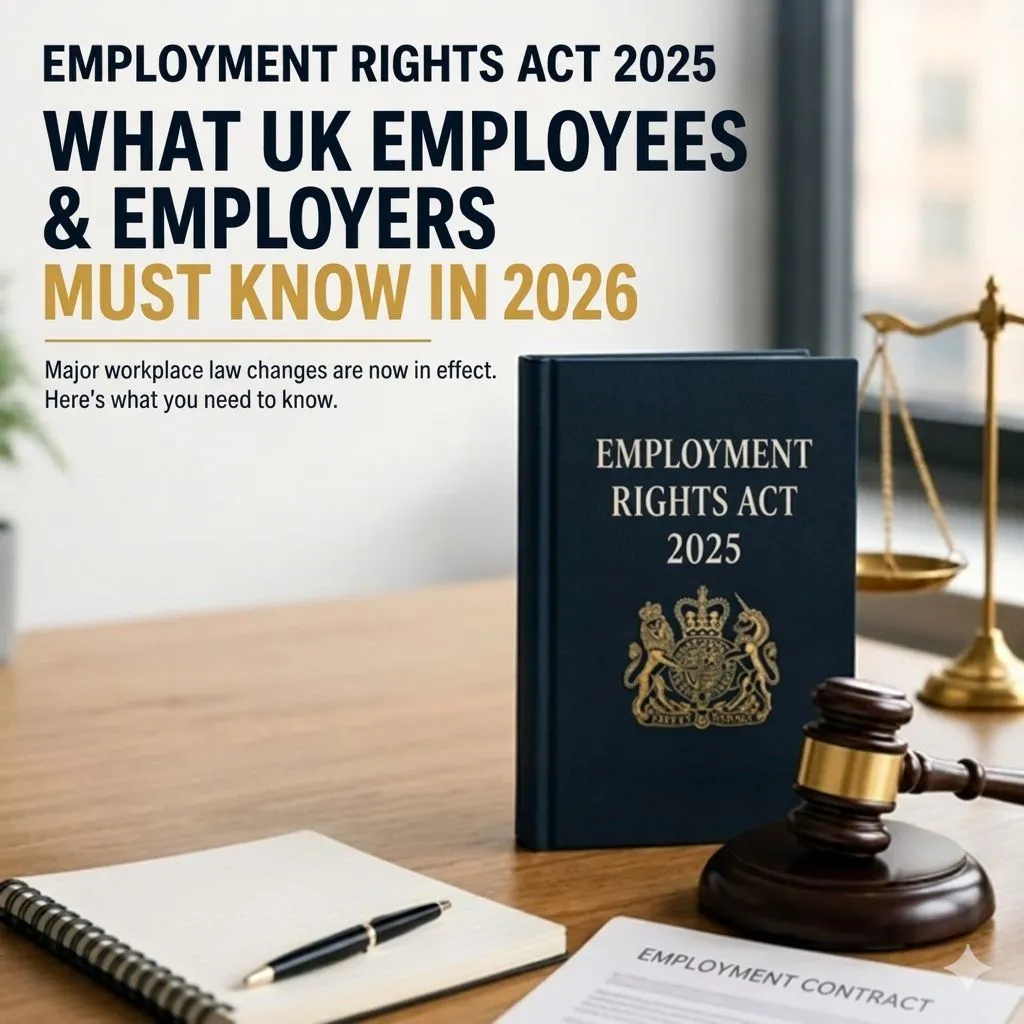
The UK employment law landscape changed significantly in April 2026. The Employment Rights Act 2025 introduced some of the biggest workplace reforms seen in years, affecting both employees and employers across England and Wales.
From expanded day-one rights to changes in Statutory Sick Pay (SSP), new whistleblowing protections, and increased pressure on employers to address gender equality and menopause support, businesses can no longer rely on outdated HR policies or contracts.
For employees, these reforms create stronger workplace protections and wider access to legal remedies if employers fail to comply.
At Adam Bernard Solicitors, our London employment law team advises both employers and employees on navigating these important legal changes.
🎥 Watch Our Employment Law Podcast
What Changed on 1 April 2026?
Several major employment law reforms took effect in April 2026 under the Employment Rights Act 2025 and related legislation. These changes affect recruitment, HR policies, payroll systems, absence management, redundancy procedures, and employee rights.
Key reforms include:
- New day-one family leave rights
- Statutory Sick Pay available from the first day of absence
- Removal of the Lower Earnings Limit for SSP eligibility
- Enhanced whistleblowing protection relating to sexual harassment
- Increased collective redundancy penalties
- Expanded workplace equality expectations, including menopause action planning
- Creation of the new Fair Work Agency enforcement body
These reforms apply to employers throughout the UK and are particularly important for businesses with flexible workers, part-time staff, or high employee turnover.
Day-One Family Leave Rights Explained
One of the most important changes for workers is the introduction of enhanced day-one employment rights.
From April 2026, eligible employees no longer need a qualifying service period before accessing certain family-related rights, including:
- Paternity Leave
- Unpaid Parental Leave
- Bereaved Partner’s Paternity Leave
Previously, many employees needed months of continuous service before becoming eligible. The new rules are designed to create fairer treatment for workers who change jobs or are in newer employment relationships
Why This Matters for Employers
Employers must now:
- Update employment contracts and staff handbooks
- Train managers on eligibility rules
- Review absence and leave procedures
- Ensure HR systems correctly process leave from day one
Failure to apply these rights correctly could expose employers to grievances, tribunal claims, or discrimination allegations.
What Employees Should Know
If your employer refuses qualifying leave because you have “not worked there long enough,” the refusal may now be unlawful depending on the circumstances.
Employees may have grounds for:
- Unlawful detriment claims
- Discrimination claims
- Employment tribunal action
- Compensation for financial loss
New Statutory Sick Pay Rules
The biggest operational change for many businesses is the complete overhaul of Statutory Sick Pay (SSP).
From 6 April 2026:
- SSP is payable from day one of sickness absence
- The previous three unpaid “waiting days” were abolished
- The Lower Earnings Limit was removed
- More part-time and low-paid workers now qualify
- SSP is paid at the lower of:
- £123.25 per week, or
- 80% of average weekly earnings
This represents a major shift in employer obligations.
Employees Who Previously Did Not Qualify May Now Be Entitled
Under the previous system, many workers earning below the Lower Earnings Limit received no SSP at all. The 2026 reforms significantly expand eligibility, particularly for:
- Zero-hours workers
- Part-time employees
- Agency workers
- Seasonal staff
- Lower-paid workers
Employer Risks
Employers who fail to pay SSP correctly could face:
- HMRC investigations
- Fair Work Agency enforcement
- Employment tribunal claims
- Financial penalties and backdated payments
Many businesses are still operating outdated sickness policies drafted before the 2026 reforms. This creates substantial compliance risks.
Gender Pay Equality & Menopause Action Plans
Another growing focus in 2026 is workplace equality.
While some reporting obligations remain voluntary for now, the government has made clear that employers are expected to take proactive steps regarding:
- Gender pay gap reduction
- Menopause support policies
- Workplace equality planning
- Anti-harassment procedures
The legal and reputational risks around workplace discrimination continue to increase.
Why Menopause Policies Matter
Employers who ignore menopause-related workplace issues may face claims involving:
- Sex discrimination
- Disability discrimination
- Failure to make reasonable adjustments
- Constructive dismissal
Tribunals are increasingly willing to recognise the impact of menopause symptoms on working conditions.
Employers should consider:
- Flexible working arrangements
- Manager training
- Occupational health support
- Updated equality policies
What Employers Need to Do NOW
The 2026 reforms are not simply “administrative updates.” They require immediate operational changes.
Businesses should urgently:
Review Employment Contracts
Ensure contracts reflect current statutory rights and updated leave entitlements.
Update HR Policies
Sickness, parental leave, grievance, redundancy, and equality policies should all be revised.
Audit Payroll Systems
SSP calculations and eligibility rules must comply with the new framework.
Train Managers
Line managers must understand the new rules to avoid inconsistent or unlawful decision-making.
Review Redundancy Procedures
Protective awards for failures in collective consultation have increased significantly.
Seek Legal Advice Early
Employment disputes are often easier and less expensive to resolve before formal claims arise.
Employee Rights: Can I Take Action if My Employer Does Not Comply?
Yes. Employees have legal options if employers breach their obligations under the new rules.
Depending on the issue, employees may be able to bring claims for:
- Unlawful deduction from wages
- Failure to pay Statutory Sick Pay
- Discrimination
- Detriment for asserting statutory rights
- Automatically unfair dismissal
- Constructive dismissal
- Breach of contract
Time limits for employment tribunal claims are strict, so obtaining legal advice quickly is important.
Employees should also keep records of:
- Emails and written communications
- Payslips
- Sickness records
- HR correspondence
- Leave requests and refusals
Employment Law Advice from Our London Solicitors
The Employment Rights Act 2025 has fundamentally changed the relationship between employers and employees in 2026.
Whether you are an employer updating workplace procedures or an employee concerned about your legal rights, early legal advice can help protect your position and reduce risk.
At Adam Bernard Solicitors, our experienced employment law team advises clients across London and throughout the UK on:
- Employment disputes
- Unfair dismissal
- Workplace discrimination
- Statutory Sick Pay disputes
- HR compliance
- Settlement agreements
- Redundancy and restructuring
- Day-one employment rights
If you need advice from an experienced Adam Bernard Solicitors employment law team, contact us today for confidential legal guidance.
Disclaimer: This content is for general information purposes only and does not constitute legal advice. For advice on your specific situation, please contact Adam Bernard Solicitors directly.