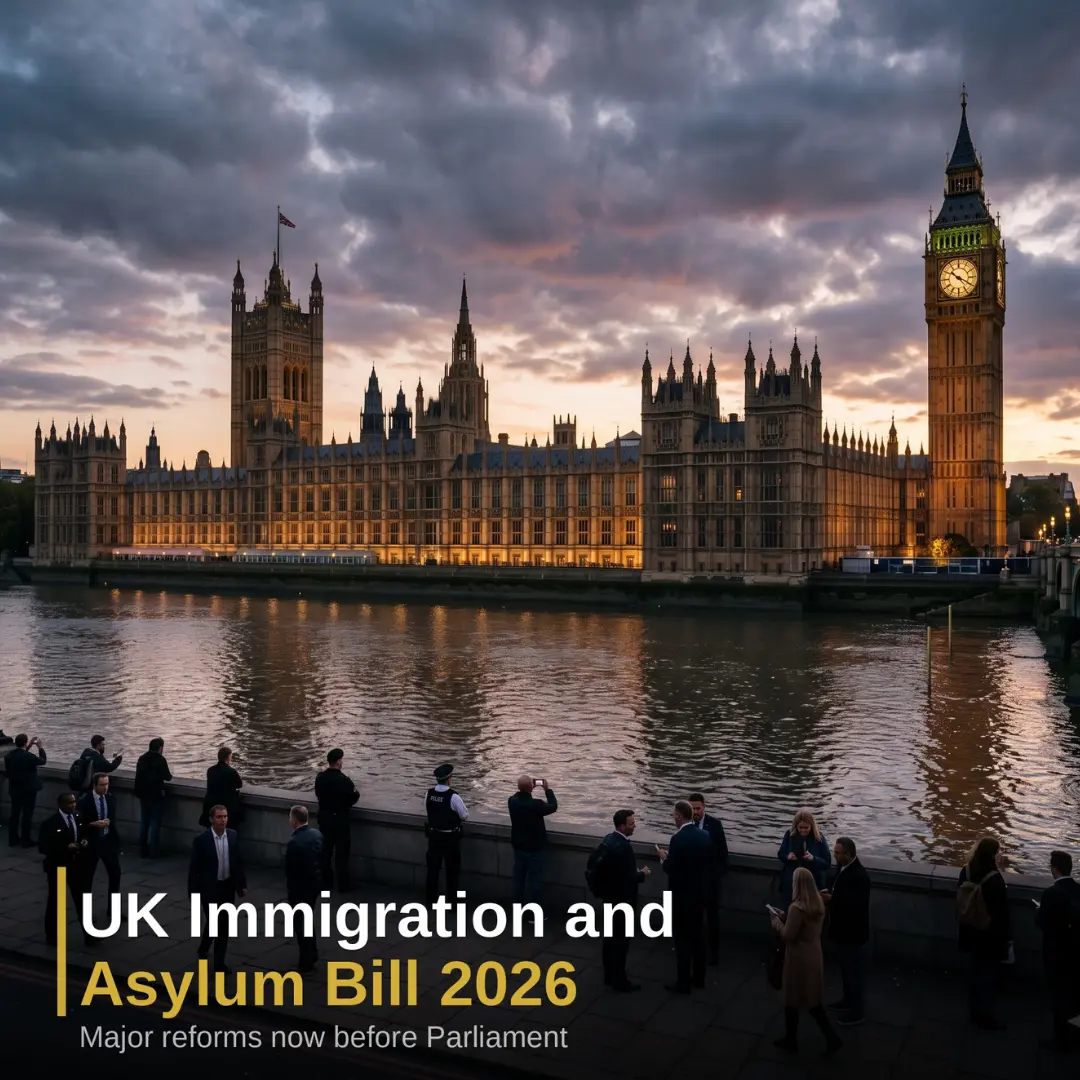
The UK’s Immigration and Asylum Bill is set to go before MPs for debate this week. Announced in the King’s Speech 2026, this is one of the most significant overhauls to Britain’s immigration and asylum framework in decades.
At Adam Bernard Solicitors, our immigration team is tracking every development closely. Below is a plain-English breakdown, sourced directly from official UK Government and Parliament publications.
What Is the Immigration and Asylum Bill 2026?
In the King’s Speech 2026, the Government confirmed that legislation would be introduced to increase confidence in the security of the immigration and asylum systems. That legislation is the Immigration and Asylum Bill, which now goes before MPs. GOV.UK
The Bill builds on two major policy documents published by the Home Office:
- Restoring Control over the Immigration System — Immigration White Paper, May 2025
- Restoring Order and Control — Asylum Policy Statement, November 2025
Key Changes Coming Under the Bill
1. Refugee Status Becomes Temporary
This is the most significant single change. The Government is amending the existing rules to reduce the duration of permission to stay from 5 years to 30 months for those recognised as refugees or in need of humanitarian protection. The rules apply to adults and families, including accompanied asylum-seeking children, who claim asylum on and after 2 March 2026. UK Parliament
Unaccompanied asylum-seeking children are exempt from this change while the pathway for this cohort is developed. House of Commons Library
2. A New ‘Core Protection’ Model
The Government has set out a new ‘core protection’ offer for refugees, which marks a significant change in direction — away from an assumption of offering permanent protection, and towards a more basic and temporary protection. GOV.UK
3. Visa Brake for Certain Nationalities
A visa brake bans citizens of Afghanistan, Cameroon, Myanmar and Sudan from applying for certain mainstream visas to live in the UK. The brake is not intended to be permanent and will be regularly reviewed, with the aim that it can be released as soon as it is considered appropriate to do so. House of Commons LibraryGOV.UK
4. Asylum Support Becomes Conditional
The legal obligation to provide support to destitute asylum seekers will be replaced with a discretionary power. Support will be denied to those with the right to work, those who have made themselves intentionally destitute, or those not complying with support conditions — for example, failing to abide by removal directions or working illegally. GOV.UK
5. Reduced Access to Public Funds
Access to taxpayer-funded benefits will be prioritised for those making an economic contribution, with a consultation planned for 2026. GOV.UK
6. Earned Settlement — Tighter Rules for ILR
The ‘earned settlement’ proposals are designed to make it more difficult to qualify for indefinite leave to remain. A public consultation on earned settlement closed in February 2026 and received over 200,000 responses. House of Commons Library
7. Stronger Border Security Powers
The Border Security, Asylum and Immigration Act 2025, which received Royal Assent on 2 December 2025, creates a framework of new, enhanced powers and offences to improve UK border security and to strengthen the asylum and immigration system. The Act deters irregular migration to the UK and reduces small boat crossings and loss of life in the Channel through new powers and data-sharing arrangements. GOV.UK
What Stays the Same — For Now
Adults and accompanied and unaccompanied children granted 5 years leave as a result of an asylum claim or further submissions made by 1 March 2026 will remain eligible to apply for settlement after 5 years under Appendix Settlement Protection.
Disclaimer: This content is for general information purposes only and does not constitute legal advice. For advice on your specific situation, please contact Adam Bernard Solicitors directly.
How Adam Bernard Solicitors Can Help
These changes are moving fast and the impact on individual cases is significant. Our immigration solicitors advise on:
- Asylum claims and appeals
- Refugee status renewals and 30-month reviews
- Spouse and family reunion visas
- Indefinite Leave to Remain (ILR) and settlement
- Judicial review of Home Office decisions
- Skilled Worker and student visas