Published: 6 November 2026 | Category: Asylum & Immigration News | Reading time: ~8 mins
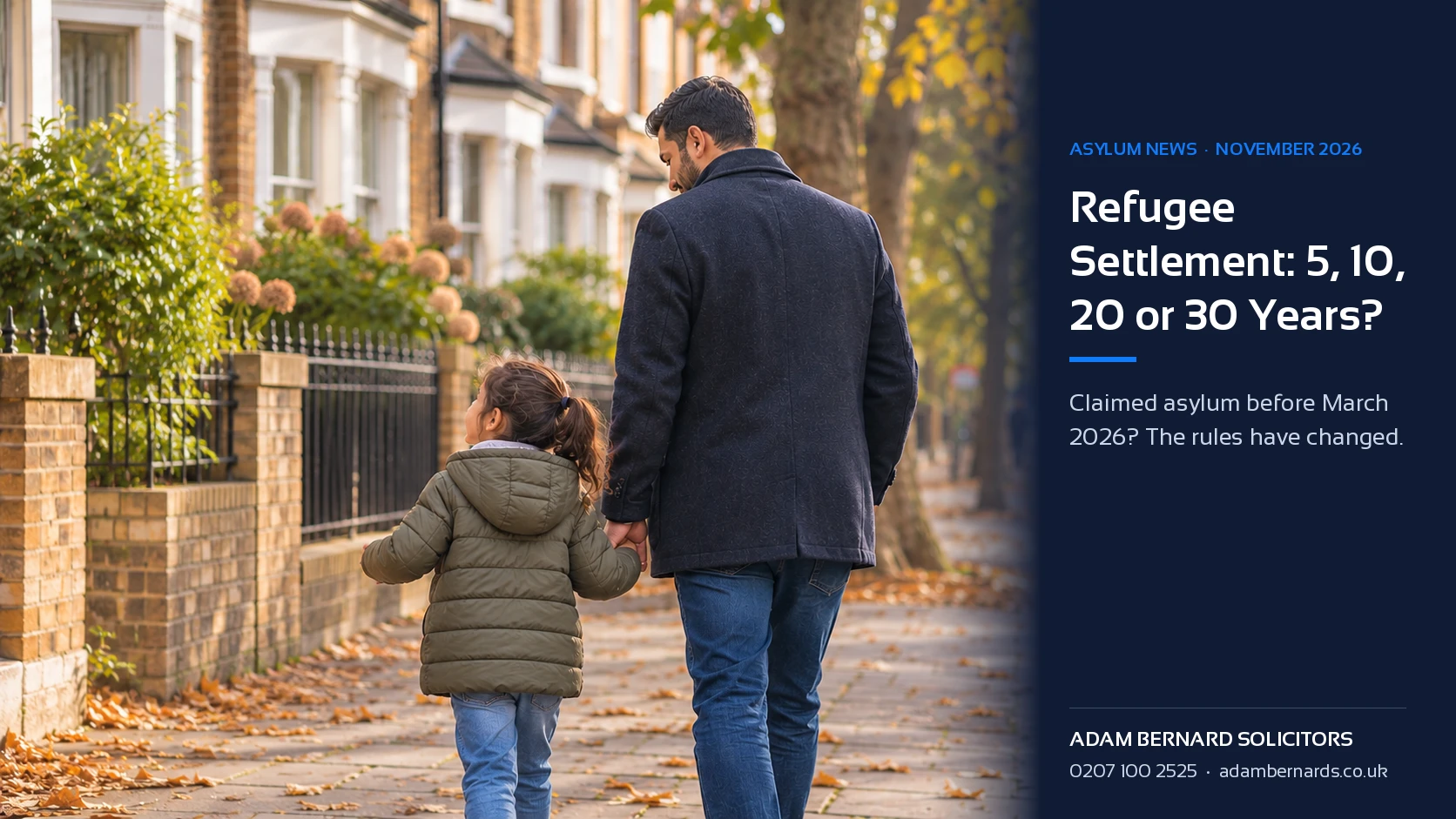
Under the earned settlement decision announced on 2 November 2026, refugees who came to the UK on a Home Office-approved safe and legal route can settle after 5 years, while refugees granted protection after claiming asylum in the UK face 20 years, reduced to 10 if they move into work or study. People who entered illegally, including by small boat, face an extra 10 years, so up to 30 in total. The Home Office set this out in its news release and the full government response.
The biggest surprise is for refugees who are already here. The response says that people who claimed asylum before 2 March 2026 will also move onto the new Core Protection model, although the time they have already spent with refugee status will count. This guide explains each route, who it affects and what refugees should do now.
Key points at a glance
- 5 years: refugees who arrive on Home Office-approved safe and legal routes.
- 10 years: refugees on the new Protection Work and Study route, for those in sustained work, education or training.
- 20 years: the standard Core Protection route for refugees who claimed asylum in the UK.
- Up to 30 years: an extra 10 years for illegal entry, such as by small boat.
- Refugees who claimed before 2 March 2026 move onto Core Protection, with their existing time counting.
- Unaccompanied asylum-seeking children keep their existing five-year route.
- Nothing has changed in law yet. The current rules apply until new Immigration Rules are laid.
Refugee settlement routes under earned settlement
How long a refugee waits to settle will depend on how they came to the UK and whether they move into work or study. The government response sets out four protection pathways:
| Route | Who it is for | Time to settlement |
|---|---|---|
| Safe and legal routes | Refugees resettled or sponsored to come to the UK through a Home Office-approved route | 5 years |
| Protection Work and Study | Refugees granted protection in the UK who move into sustained work, education or training | 10 years on this route |
| Core Protection | Refugees granted protection in the UK who do not move into work or study | 20 years |
| Illegal entry | Refugees who entered the UK illegally, such as by small boat | An extra 10 years: 20 years via work and study, or 30 years on Core Protection |
All routes also carry the new minimum settlement requirements, including a clean criminal record, B2 English and the Life in the UK test. Our guide to the 20-year settlement route explains Core Protection in more detail.
What changes for refugees who claimed asylum before 2 March 2026?
Refugees who claimed asylum before 2 March 2026, and did not arrive on a safe and legal route, will move onto Core Protection under earned settlement, but any time they have already spent with refugee status will count towards settlement. This is set out in a footnote on page 34 of the government response.
This is a change from the position in March 2026. When 30-month grants of refugee permission were introduced for claims made on or after 2 March 2026, people who claimed before that date were expected to keep the five-year route to settlement. Our earlier guide to the new refugee protection rules reflects that earlier position.
In practice, a refugee who was granted five years’ permission after a claim made in 2024 or 2025 may now face a much longer wait, unless:
- they can apply for settlement under the current rules before the new rules take effect; or
- they move into sustained work, education or training on the Protection Work and Study route.
The Protection Work and Study route
Protection Work and Study is a new route that lets refugees settle after 10 years, instead of 20, if they are in sustained work, education or training. The 10 years are counted from the date the refugee moves onto this route, so time spent on Core Protection beforehand does not normally count towards it.
The government says this is designed to reward refugees who contribute and integrate. Full details of the work, study and earnings requirements will be set out when the Immigration Rules are published.
The extra 10 years for illegal entry
Refugees who entered the UK illegally, including by small boat or other clandestine means, will ordinarily face an extra 10 years before they can settle. That means 20 years on the Protection Work and Study route, or 30 years on Core Protection.
The government response says the extra period will not apply where Article 31 of the Refugee Convention applies. Article 31 protects refugees who came directly from a territory where they were under threat, presented themselves to the authorities without delay and showed good cause for their illegal entry. Whether Article 31 applies will depend on each person’s journey, so individual advice is important.
New safe and legal routes: 5-year settlement
Refugees who come to the UK on a Home Office-approved safe and legal route will be able to settle after five years. On 29 October 2026, the Home Office opened applications for charities to become lead sponsors on two new refugee sponsorship routes:
| Route | Who sponsors | Status |
|---|---|---|
| Named community sponsorship | Community groups, churches and local organisations | Lead sponsor applications open; first arrivals expected autumn 2027 |
| Refugee study | Universities, working with specialist organisations | Lead sponsor applications open; first arrivals expected autumn 2027 |
| Refugee work | Employers | Opens in spring 2027 |
The routes are capped. The Home Office says arrivals through them and the UK Resettlement Scheme will start in the hundreds and grow to the low thousands. Lead sponsors must be registered UK charities or non-profits. They cannot assess refugee claims or grant permission to enter the UK. See the Home Office’s policy guidance on refugee sponsorship routes.
Should refugees apply for settlement now?
If you hold refugee status or humanitarian protection and already qualify for settlement under the current rules, you should usually apply as soon as you are eligible. The Home Office says settlement rules apply at the point of application, and no start date for the new rules has been announced. New Immigration Rules are published in the statement of changes collection on GOV.UK.
A practical checklist:
- Check your permission: find the start and end dates of your refugee or humanitarian protection permission.
- Apply before your current permission expires, and keep evidence of when you applied.
- Check your record: the new rules require a clean criminal record and no debt owed to the taxpayer.
- Start building English and Life in the UK evidence now, because future settlement applications will need B2 English and the Life in the UK test.
- If you are working or studying, keep payslips, contracts and enrolment letters in case you move onto the Protection Work and Study route.
If you are applying now, see our ILR as a refugee service page for how a settlement protection application works.
How Adam Bernard Solicitors can help
Our immigration and asylum solicitors help refugees and their families understand where they stand under the new rules and apply for settlement at the right time. We are regulated by the Solicitors Regulation Authority and work from our offices in High Holborn and Upton Park, and by video call.
We can:
- check whether you can apply for settlement under the current rules, and when;
- work out which protection route you are likely to be on under earned settlement;
- advise on whether Article 31 of the Refugee Convention applies to your journey; and
- challenge refusals through an appeal or judicial review.
Speak to our immigration solicitors on 0207 100 2525 or contact us online.
This article is for informational purposes only and does not constitute legal advice. It reflects government policy published on 2 November 2026. The Immigration Rules have not yet changed, and the final rules may differ.